Secrets of the Nile
Explore the gods, pharaohs, and mystical pyramids of Ancient Egypt.
Ancient Egypt Overview
Ancient Egypt was one of the longest-lasting civilizations in history, existing for over 3000 years along the Nile River. It was known for its religion, architecture, science, and mysterious burial traditions.
Pharaohs of Egypt
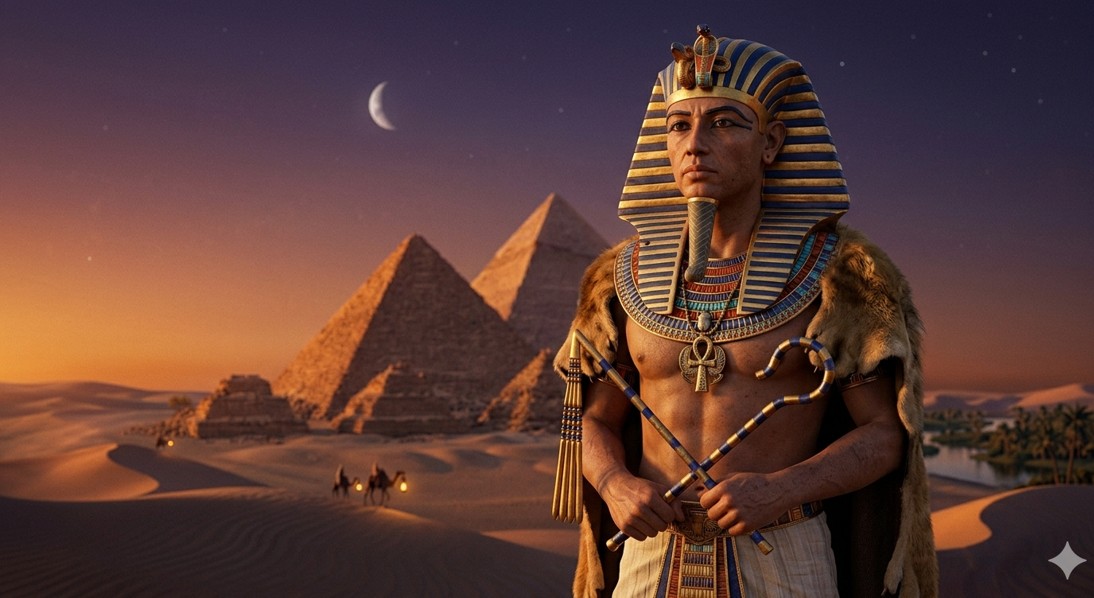
Pharaohs were considered divine rulers, seen as gods on Earth who controlled both politics and religion.
| Pharaoh | Period | Known For |
|---|---|---|
| Ramses II | 1279 - 1213 BC | Great temples and military power |
| King Tutankhamun | 1332 - 1323 BC | Famous untouched tomb |
| Cleopatra VII | 51 - 30 BC | Last Pharaoh of Egypt |
The Mystery of the Pyramids
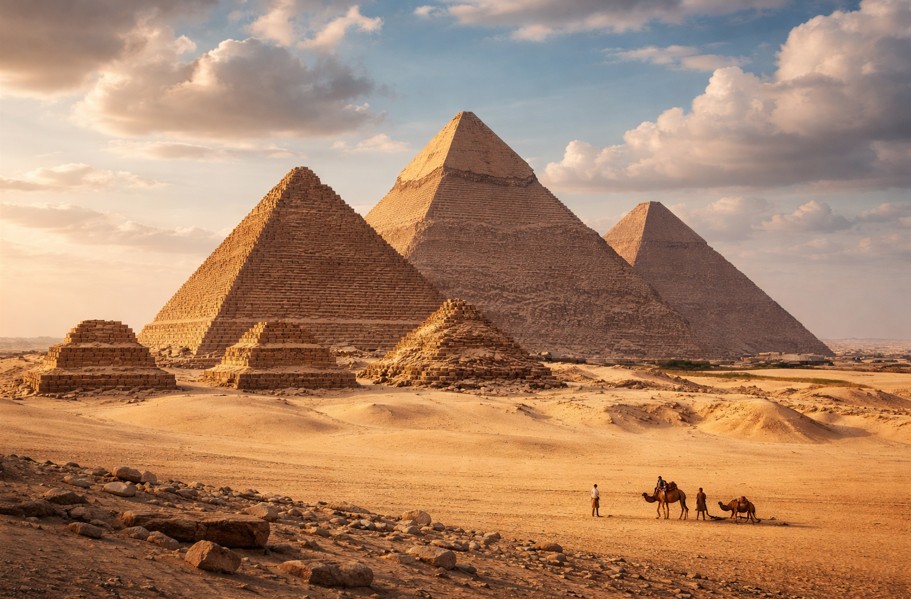
The pyramids were built as eternal tombs for pharaohs, designed to protect their journey into the afterlife. The Great Pyramid of Giza remains one of the greatest engineering mysteries in history.
| Pyramid | Location | Purpose |
|---|---|---|
| Great Pyramid of Giza | Giza | Tomb of Pharaoh Khufu |
| Step Pyramid of Djoser | Sakkara | First pyramid ever built |
| Pyramid of Khafre | Giza | Associated with Great Sphinx |
Mummification Process
Mummification was a sacred process used to preserve the body for the afterlife. It could take up to 70 days and involved removing organs, drying the body, and wrapping it in linen.
| Step | Description |
|---|---|
| Removal | Organs were carefully removed |
| Drying | Body was preserved using natron salt |
| Wrapping | Body wrapped in linen strips |
| Tomb Placement | Placed in sarcophagus inside tomb |
Egyptian Mythology
Religion played a central role in Egyptian life. Gods represented nature, death, and creation.
- Ra - Sun God, creator of life
- Osiris - God of afterlife
- Isis - Goddess of magic and protection
- Anubis - God of mummification
- Horus - Sky and kingship god
The Curse of the Pharaohs
One of the most famous mysteries is the curse believed to protect royal tombs. It is said that anyone who disturbs a pharaoh's tomb will suffer misfortune or death.
| Event | Detail |
|---|---|
| Tutankhamun Tomb Discovery | 1922 discovery by Howard Carter |
| Mysterious Deaths | Some explorers died after opening tomb |
| Scientific View | Possible bacteria or coincidence |
Important Contributions
| Invention | Impact |
|---|---|
| Hieroglyphics | One of the earliest writing systems |
| Calendar System | Based on Nile flooding cycle |
| Medicine | Early surgical and medical knowledge |
| Architecture | Massive stone construction techniques |
Life in Ancient Egypt
People lived along the Nile River, farming crops like wheat and barley. Religion, rituals, and afterlife beliefs were central to daily life.