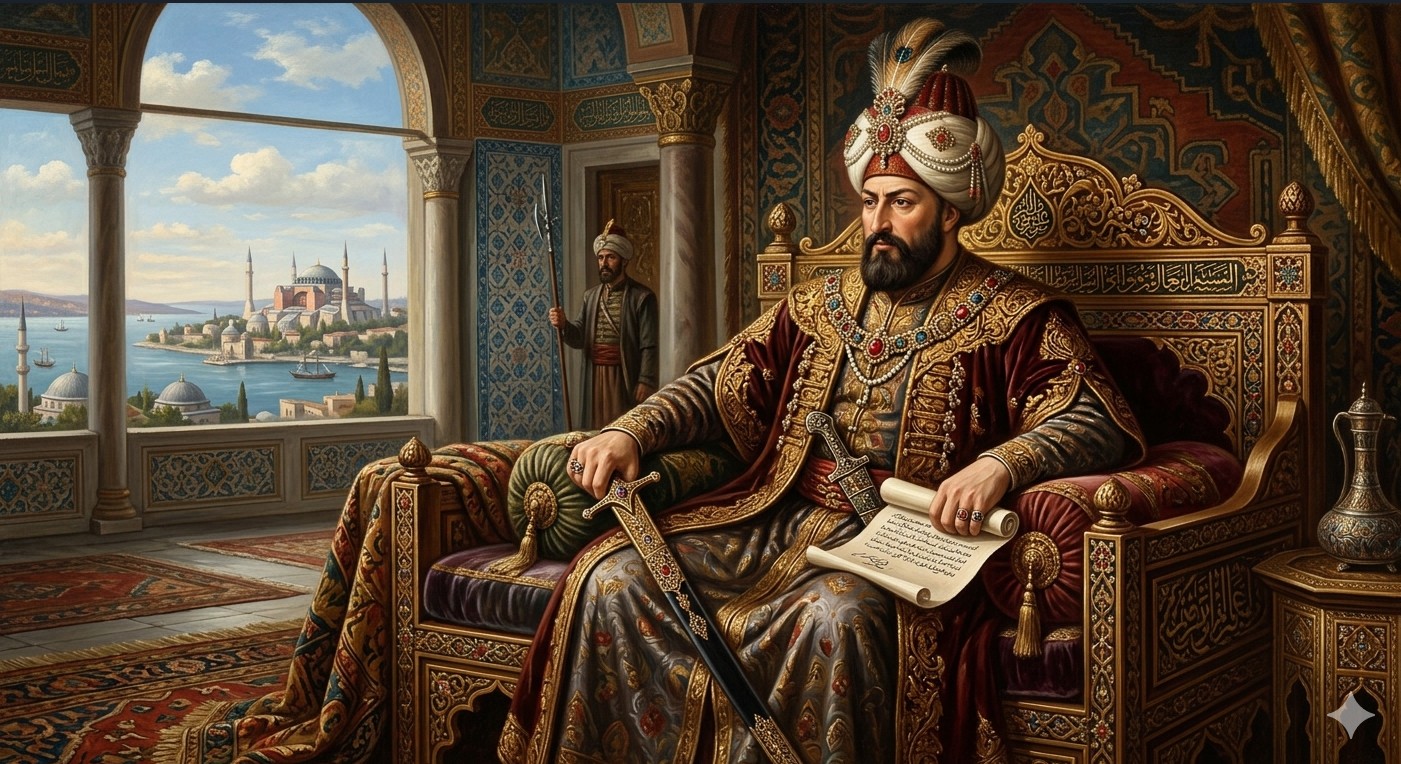
Mehmed II - The Conquest of Constantinople (1453)
The Fall of Byzantium and Rise of an Empire
The Story of the Conquest
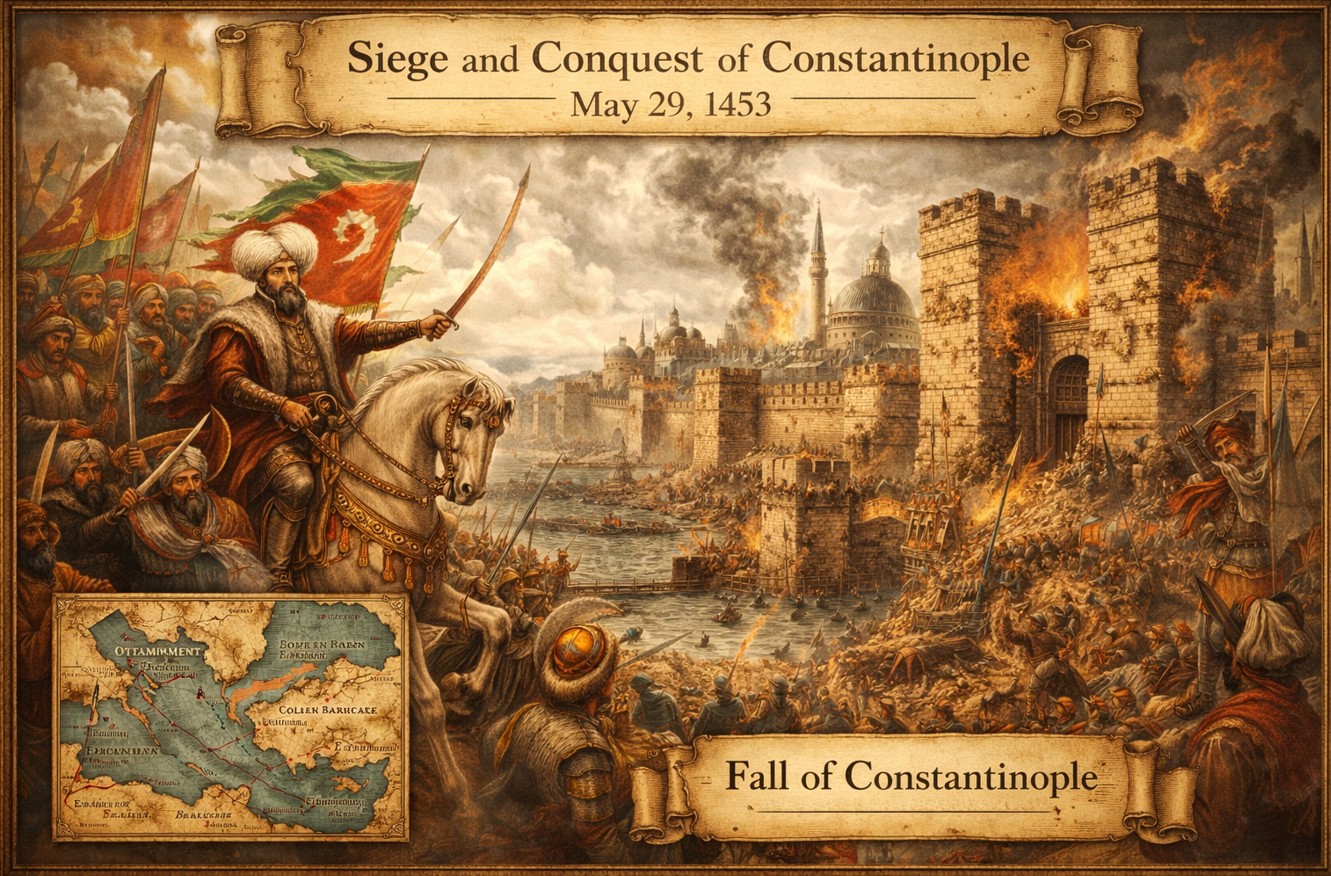
In 1453, Sultan Mehmed II launched one of the most important military campaigns in history: the conquest of Constantinople. The Byzantine Empire, once powerful, was now weakened and surrounded by Ottoman lands.
Mehmed prepared for years. He built the massive fortress of Rumeli Hisari to control the Bosphorus and prevent aid from reaching the city. He also ordered the creation of giant cannons, capable of breaking the strong Byzantine walls.
On April 6, 1453, the siege began. Ottoman forces surrounded the city from land, while the Byzantine navy protected the Golden Horn with a giant chain. In response, Mehmed executed a brilliant strategy: he transported ships over land into the Golden Horn.
After weeks of intense fighting, on May 29, 1453, the final assault began. Ottoman soldiers attacked in waves. The Janissaries led the final attack and successfully breached the walls.
Constantinople fell, marking the end of the Byzantine Empire and the beginning of a new era for the Ottoman Empire.
Important Commanders
| Name | Role | Side |
|---|---|---|
| Mehmed II | Sultan and Commander | Ottoman |
| Zaganos Pasha | Military Commander | Ottoman |
| Halil Pasha | Grand Vizier | Ottoman |
| Constantine XI | Emperor | Byzantine |
| Giovanni Giustiniani | Defense Commander | Byzantine |
Military Units
| Unit | Description |
|---|---|
| Janissaries | Elite infantry soldiers of the Ottoman army |
| Azaps | Light infantry, first attack waves |
| Artillery Corps | Operated massive cannons |
| Byzantine Guards | Defenders of the city walls |
Military Strategies
| Strategy | Explanation |
|---|---|
| Massive Cannons | Used to destroy the strong city walls |
| Naval Transport | Ships moved over land into Golden Horn |
| Wave Attacks | Continuous attacks to weaken defenses |
| Final Assault | Janissaries captured the city |