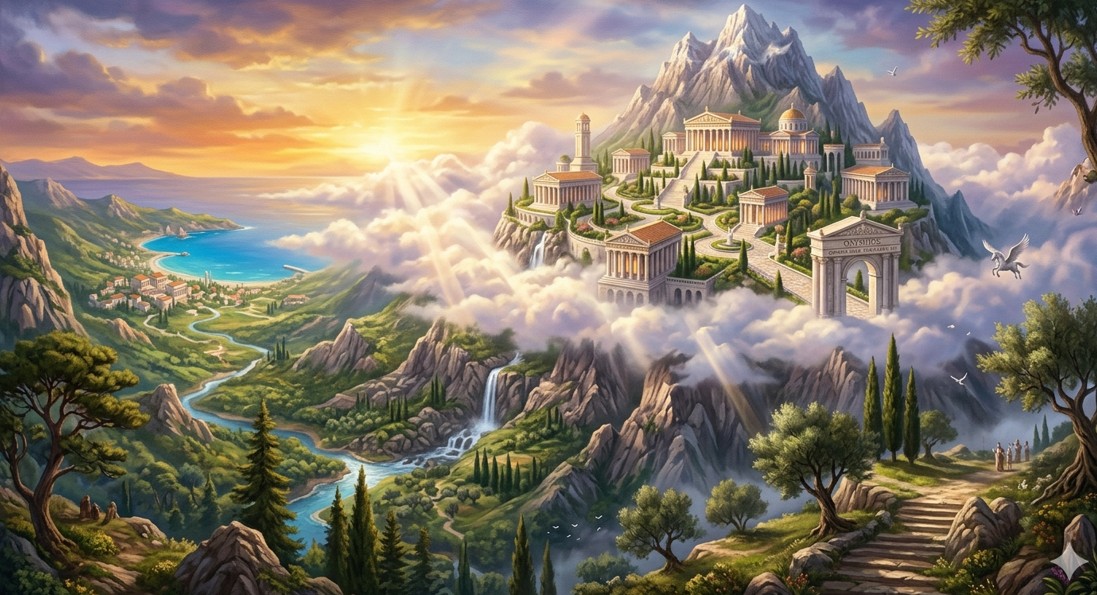
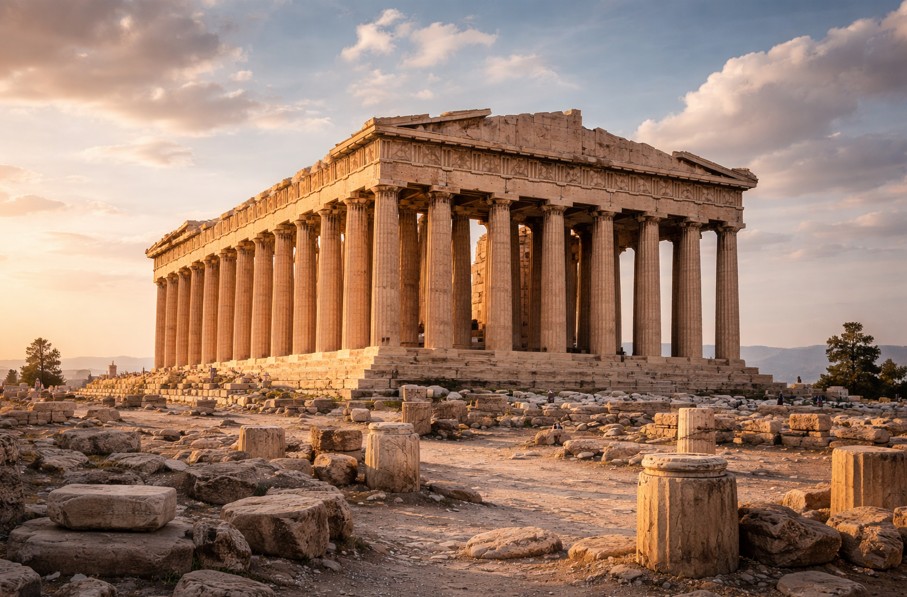
Legends of Olympus
Dive into the myths of mighty gods, heroes, and epic battles of Ancient Greece.
Ancient Greece Overview
Ancient Greece was one of the most influential civilizations in history, developing philosophy, democracy, science, and mythology that still shape the modern world today.
Greek Mythology
| God / Hero | Domain | Description |
|---|---|---|
| Zeus | Sky & Thunder | King of the gods, ruler of Olympus |
| Poseidon | Sea | God of oceans and earthquakes |
| Hades | Underworld | Ruler of the dead |
| Athena | Wisdom & War | Goddess of intelligence and strategy |
| Hercules | Hero | Famous for his 12 labors |
Great Philosophers & Scientists
| Name | Field | Contribution |
|---|---|---|
| Socrates | Philosophy | Father of critical thinking |
| Plato | Philosophy | Founded Academy, wrote Republic |
| Aristotle | Science & Logic | Teacher of Alexander the Great |
| Hippocrates | Medicine | Father of modern medicine |
| Archimedes | Physics & Math | Discovered principles of buoyancy |
Important Inventions & Discoveries
| Invention | Description |
|---|---|
| Democracy | First system of citizen-based government |
| Olympic Games | Ancient sports competition held in Olympia |
| Philosophy | Systematic thinking about life and existence |
| Geometry | Mathematical study developed by Greeks |
| Theater | Tragedy and comedy performances |
Life, Rules & Entertainment
| Aspect | Description |
|---|---|
| City-States (Polis) | Independent cities like Athens and Sparta |
| Sparta System | Military-based strict society |
| Athens System | Birthplace of democracy and culture |
| Olympic Games | Religious and sports festival every 4 years |
| Theater Culture | Drama, tragedy, and comedy performances |
Rules & Society
Ancient Greek society was divided into citizens, women, slaves, and foreigners. Only male citizens could participate in politics in most city-states.
Laws were different in each city-state, especially between Athens and Sparta.