Jewish history is one of the oldest and most influential historical narratives in human history. With a history spanning over four thousand years, the Jewish people have profoundly impacted world history in the fields of religion, culture, law, trade, science, and politics. This history is not merely the past of a single people, but a grand civilizational process that has played a significant role in shaping the Middle East, Europe, and the modern world.
The Origins of the Jews and the Ancient Middle East
Jewish history began in the Ancient Middle East. Mesopotamia, Canaan, Egypt, and the Levant region were the first centers of Jewish history. According to contemporary historical research, the ancestors of the Jews were the ancient Hebrews, who were part of the Semitic peoples.
Major Powers of the Region:
- Ancient Egypt
- Hittites
- Assyrians
- Babylonians
- Persians
The Era of Abraham and the Beginning of the Jewish Tradition
According to Jewish tradition, the spiritual ancestor of the Jews is Abraham. According to the Torah, Abraham left the city of Ur in Mesopotamia and migrated to the land of Canaan. The lineages descending from Jacob's twelve sons were called the "Israelites."
Moses and the Birth of Judaism
One of the most critical turning points in Jewish history is the era of Moses. According to Jewish tradition, Moses saved the Israelites from slavery in Egypt. This event is known as the "Exodus."
The Ten Commandments and Fundamental Laws
The foundational moral principles that regulate social life, given to Moses at Mount Sinai.
Religious Principles
- You shall have no other gods before me.
- You shall not make for yourself an idol.
- You shall not take the name of the Lord your God in vain.
- Remember the Sabbath day, to keep it holy.
Social & Moral Principles
- Honor your father and your mother.
- You shall not murder.
- You shall not commit adultery.
- You shall not steal.
- You shall not bear false witness.
- You shall not covet your neighbor's goods.
"The Ten Commandments united the Jewish community under common rules, later influenced Christianity and Islam, and contributed to the fundamental ethical understanding of modern legal systems."
The Torah and Sacred Texts
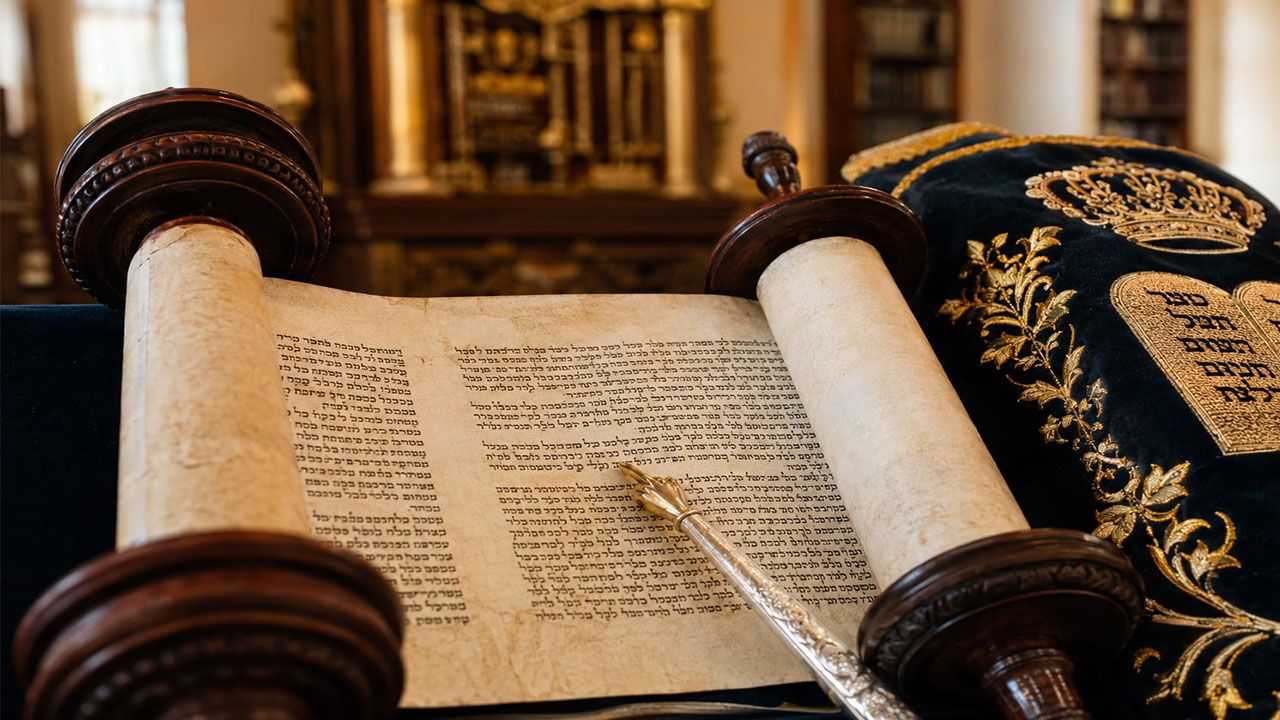
The foundational section of the Jewish holy book is the Torah. However, Jewish sacred texts do not consist solely of the Torah. The collective name is the "Tanakh", which consists of three parts:
- Torah (The Law)
- Nevi'im (The Prophets)
- Ketuvim (The Writings)
Key Historical Periods
The Babylonian Exile (586 BCE)
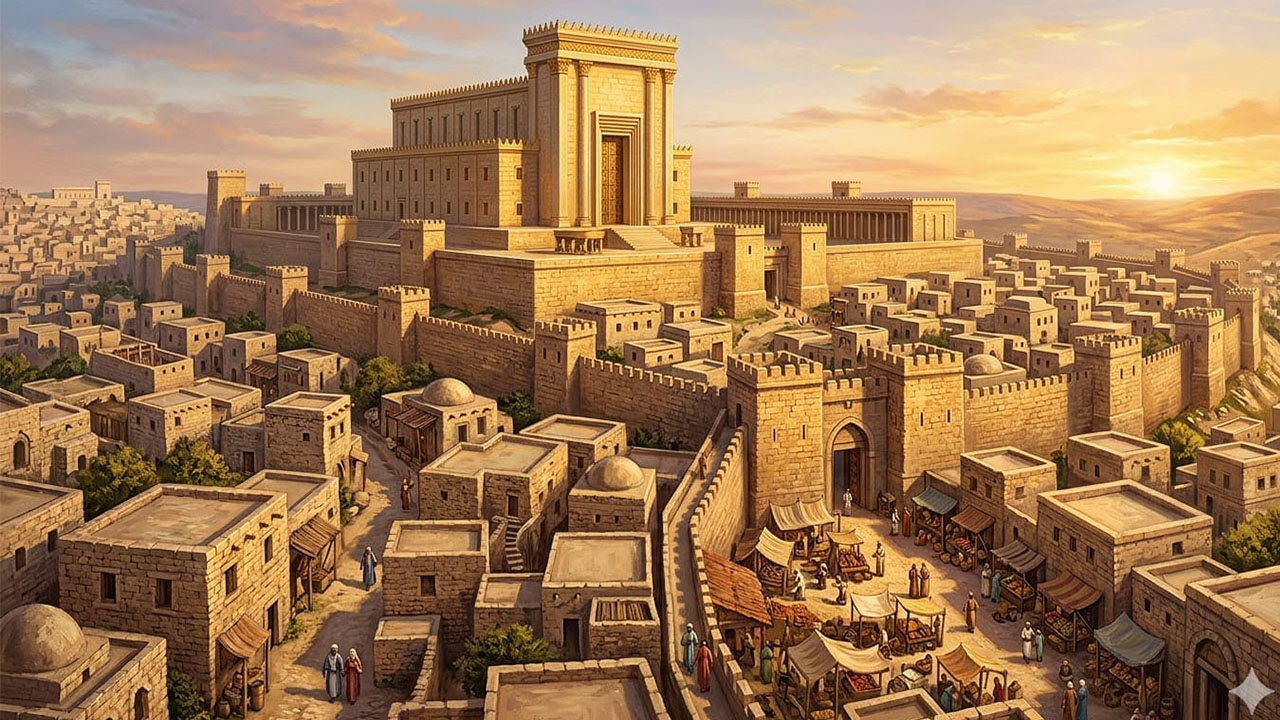
Babylonian King Nebuchadnezzar captured Jerusalem, destroyed the First Temple, and exiled the majority of the Jews. This marked the beginning of the Diaspora.
The Persian Period (539 BCE)
Persian King Cyrus the Great conquered Babylon, allowed the Jews to return to Jerusalem, and supported the rebuilding of the Second Temple.
The Roman Period (70 CE)
The Roman army besieged Jerusalem and destroyed the Second Temple. The Western Wall is all that remains of the Temple today.
The Diaspora and the Middle Ages
The Diaspora refers to the dispersion of Jews to various regions of the world, including Europe, North Africa, and the Middle East. While they developed different cultural characteristics in each region, their religion, Hebrew tradition, and community solidarity remained common.
Jews in the Islamic World & Ottoman Empire
Following the rise of Islam, many Jewish communities lived under Muslim rule, often referred to as the "Jewish Golden Age." Later, in the 15th and 16th centuries, the Ottoman Empire opened its doors to Jewish immigrants fleeing the Inquisition in Spain (Sephardic Jews). They became influential in trade, medicine, printing, and diplomacy.
Major Jewish Cultural Groups
Central & Eastern Europe
Developed the Yiddish language and distinct cultural traditions throughout European history.
Spain & Portugal
Spoke the Ladino language. Many migrated to the Ottoman Empire and North Africa after 1492.
Middle East & North Africa
Communities deeply rooted in the Middle East, sharing religious similarities but culturally distinct traditions.
The Modern Age, The Holocaust, and Israel
In the 18th and 19th centuries, following the Age of Enlightenment, Jews were granted citizenship rights in some countries. However, modern antisemitism also rose, leading to the Zionist movement aimed at creating a secure national homeland.
The darkest period in Jewish history is the Holocaust. Between 1933 and 1945, approximately 6 million Jews lost their lives under Nazi Germany. Following World War II, the United Nations proposed a partition plan, and the State of Israel was established in 1948.
Conclusion
Today, Jewish history is not merely the past of a single people; it is also a broad field of study of great importance for understanding human history, the history of religions, and the modern world.