Petra - The Lost City
Ancient Wonder Carved in Stone
Historical Overview
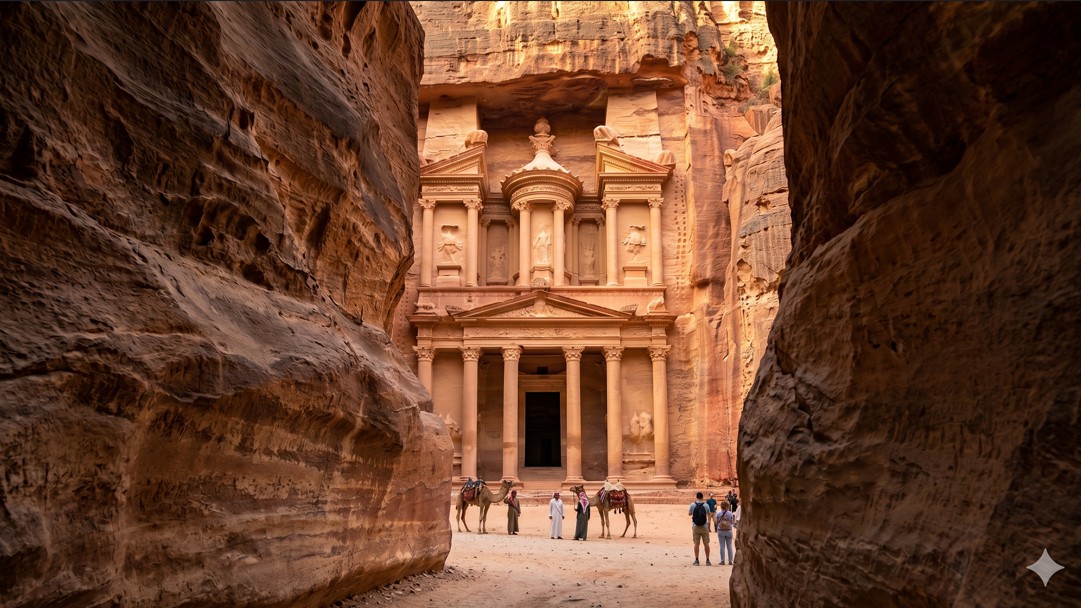
Petra is an ancient city located in modern-day Jordan. It was built by the Nabataeans around the 4th century BCE and became a major trading hub connecting Arabia, Egypt, and the Mediterranean.
The city is famous for its rock-cut architecture and advanced water system, which allowed it to survive in the desert.
Important Structures
| Structure | Description |
|---|---|
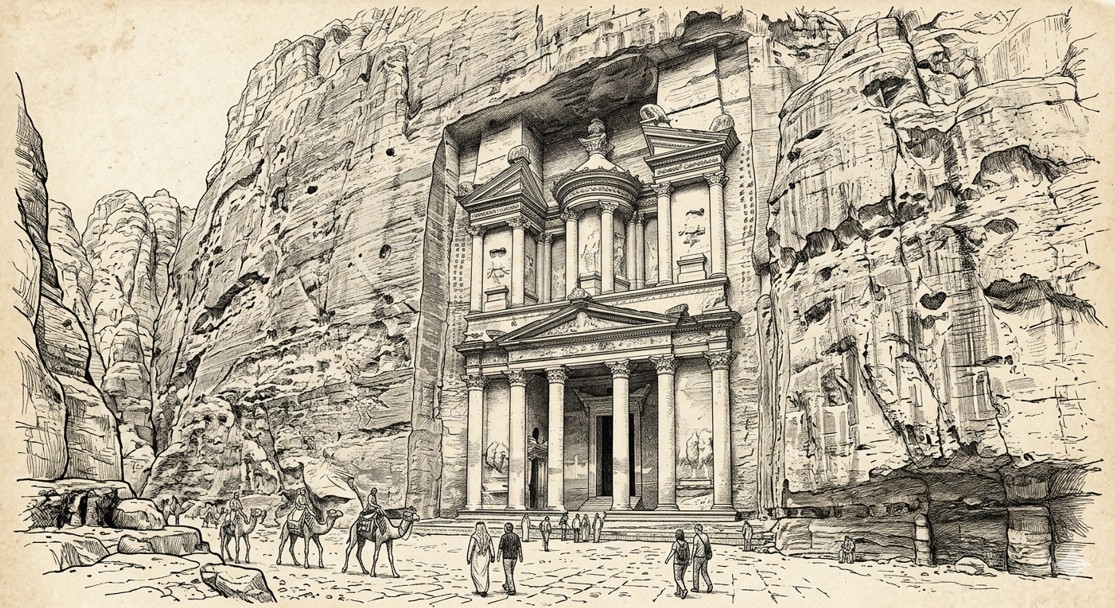
| Al-Khazneh (The Treasury) | Most famous structure, carved into rock |
| The Monastery (Ad-Deir) | Massive structure used for religious purposes |
| The Siq | Narrow canyon entrance to Petra |
| Royal Tombs | Burial sites for kings and elites |
Important Facts
| Topic | Information |
|---|---|
| Location | Jordan, Middle East |
| Built By | Nabataeans |
| Period | Around 4th century BCE |
| UNESCO | World Heritage Site (1985) |
Mysteries and Theories
Despite its beauty, Petra holds many mysteries that historians still debate today.
| Mystery | Explanation |
|---|---|
| Hidden Chambers | Some believe there are undiscovered rooms beneath Petra |
| Lost Wealth | Legends say treasures may still be hidden in the city |
| Advanced Engineering | How water systems were built in desert remains impressive |
| Sudden Decline | Why the city was abandoned is still debated |
Some theories suggest earthquakes, trade route changes, or Roman influence led to its decline.