Sumerian Civilization
The First Known Civilization in History
History
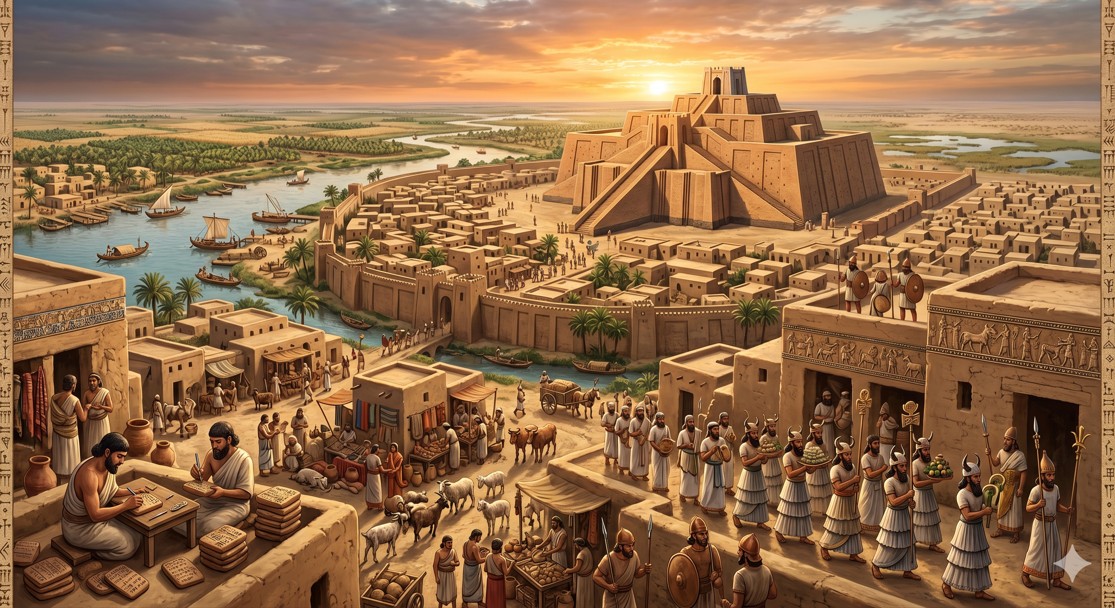
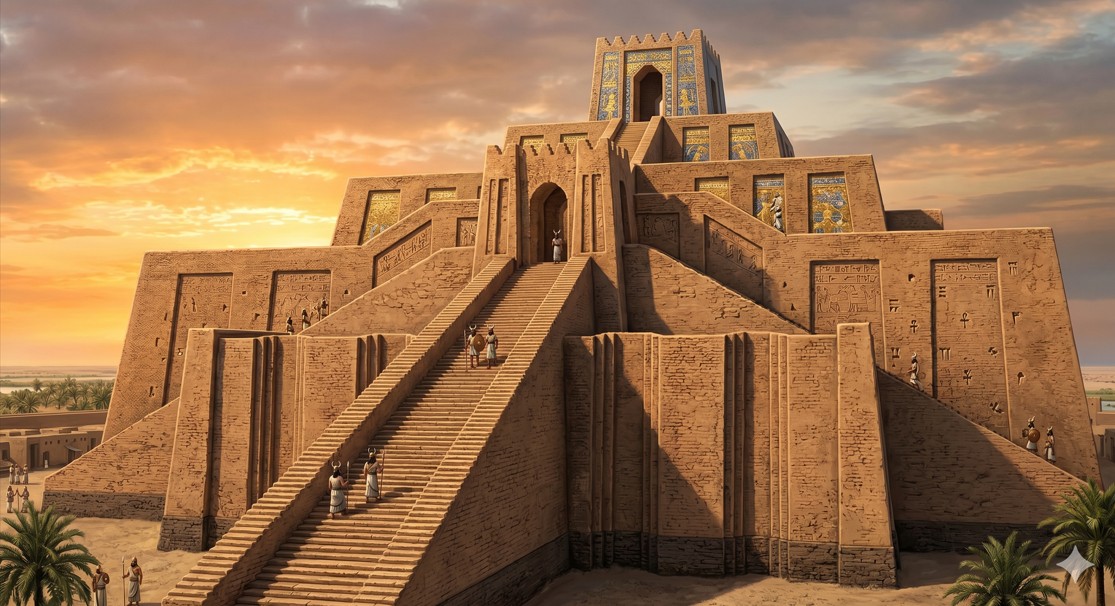
The Sumerians were one of the earliest civilizations, emerging around 4500 BCE in Mesopotamia (located between the Tigris and Euphrates rivers). They built the first cities and created one of the first organized societies.
Their civilization included major cities such as Ur, Uruk, and Lagash. Each city functioned as an independent state.
Mythology
Sumerian mythology is one of the oldest belief systems in the world. They believed in multiple gods who controlled nature and human fate.
| God | Role |
|---|---|
| Anu | God of the sky |
| Enlil | God of air and authority |
| Enki | God of water and wisdom |
| Inanna | Goddess of love and war |
Important Inventions
| Invention | Description |
|---|---|
| Cuneiform Writing | The first writing system in history |
| Wheel | Used for transportation and industry |
| Irrigation | Advanced water control systems |
| Mathematics | Base-60 number system |
Important Leaders
| Leader | City | Contribution |
|---|---|---|
| Gilgamesh | Uruk | Legendary king and hero |
| Ur-Nammu | Ur | Created early law codes |
| Lugalzagesi | Umma | Unified several Sumerian cities |
Government System
| System | Description |
|---|---|
| City-States | Independent political units |
| Kingship | Each city ruled by a king |
| Theocracy | Religion influenced governance |