Selim I (Yavuz Sultan Selim)
The Conqueror of the East
Historical Narrative
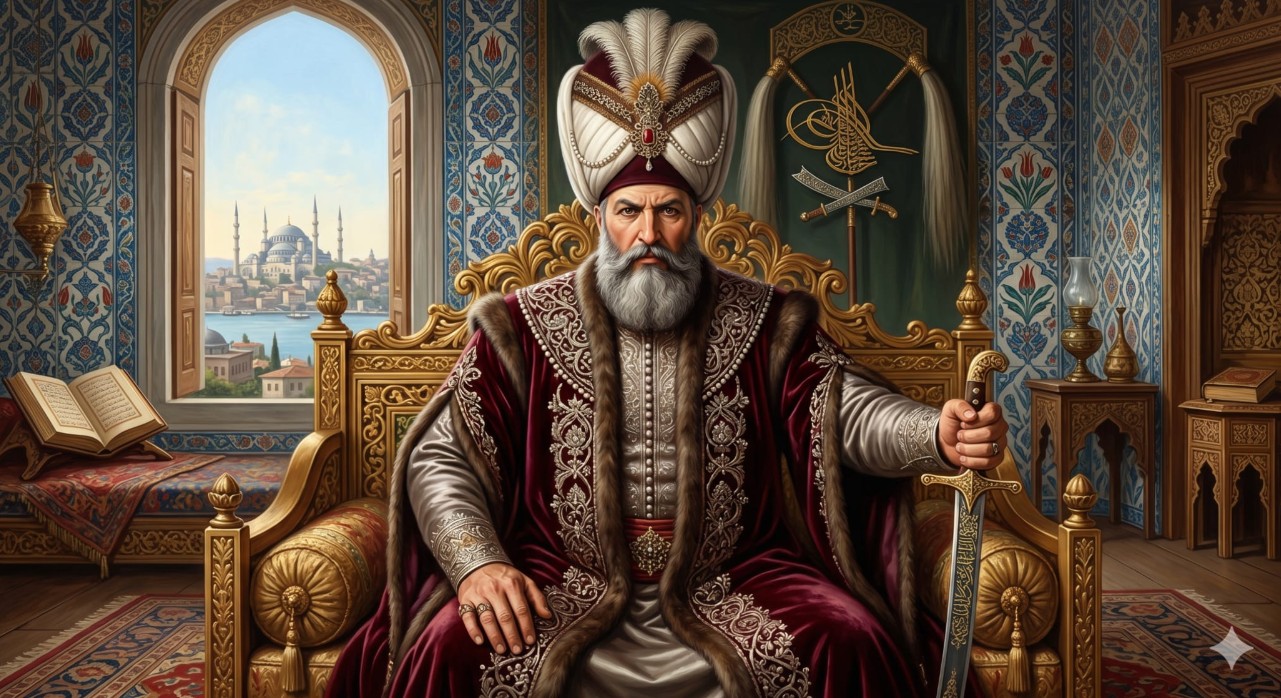
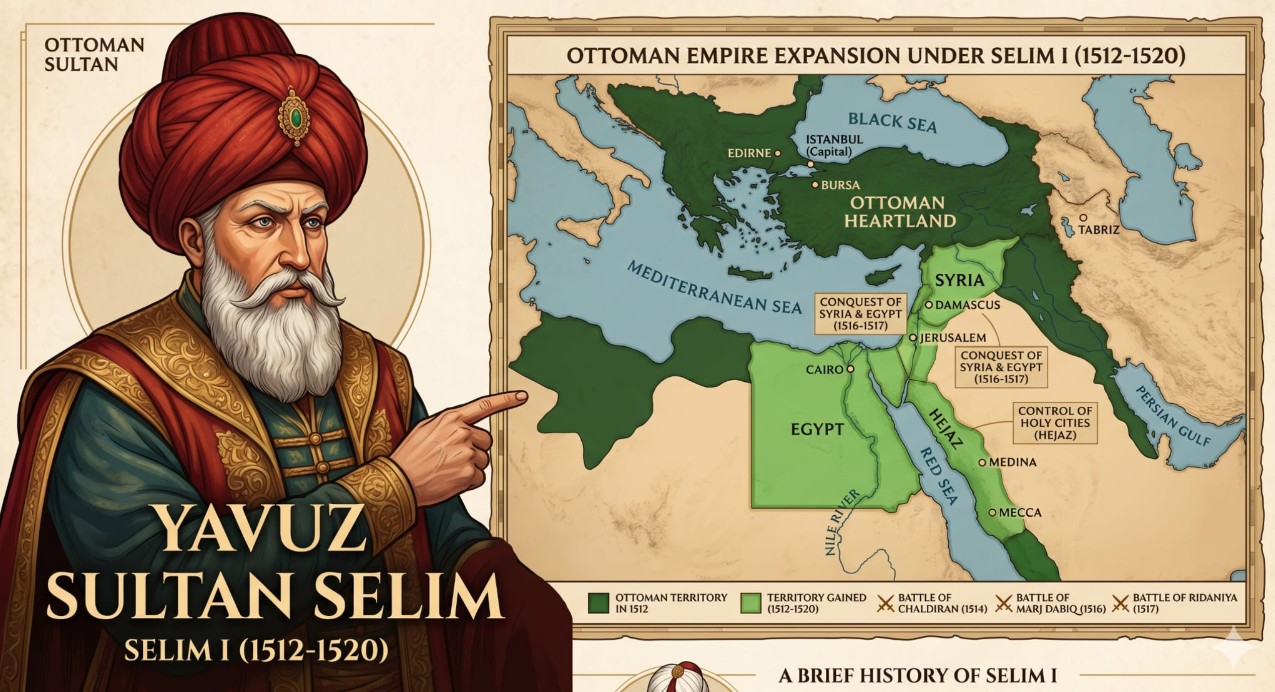
Selim I, known as Yavuz Sultan Selim (1470 - 1520), was the 9th Sultan of the Ottoman Empire. He ruled between 1512 and 1520 and dramatically expanded the empire towards the East.
Unlike previous sultans who focused on Europe, Selim turned his attention to the East. His main rivals were the Safavid Empire in Persia and the Mamluk Sultanate in Egypt.
Selim was a strict and determined ruler. He strengthened the army and ensured internal stability before launching major campaigns.
Major Campaigns and Battles
| Battle / Campaign | Year | Opponent | Result |
|---|---|---|---|
| Battle of Chaldiran | 1514 | Safavid Empire | Decisive Victory |
| Turnadag Battle | 1515 | Dulkadirids | Victory |
| Battle of Marj Dabiq | 1516 | Mamluk Sultanate | Victory |
| Battle of Ridaniya | 1517 | Mamluk Sultanate | Victory |
Empires and States Fought
| Empire / State | Region | Outcome |
|---|---|---|
| Safavid Empire | Persia (Iran) | Defeated at Chaldiran |
| Mamluk Sultanate | Egypt & Syria | Completely Conquered |
| Dulkadirids | Anatolia | Annexed |
Important Commanders
| Name | Role | Side |
|---|---|---|
| Selim I | Sultan & Commander | Ottoman |
| Hadim Sinan Pasha | Grand Vizier | Ottoman |
| Selim's Janissary Commanders | Elite Infantry Leaders | Ottoman |
| Shah Ismail I | Safavid Shah | Safavid |
| Tuman Bay II | Mamluk Sultan | Mamluk |
Military Strategies
| Strategy | Description |
|---|---|
| Gunpowder Superiority | Used firearms and cannons effectively |
| Fast Campaigns | Quick and decisive attacks |
| Discipline | Strict control over the army |
| Centralized Command | Strong leadership under the Sultan |
Results and Achievements
Selim I's victories brought Syria, Egypt, and the Holy Cities (Mecca and Medina) under Ottoman control. He also gained the title of Caliph, making the Ottoman Sultan the leader of the Islamic world.